


With a Subtitle: What Does Faith Mean in the Bible?
A brief Excerpt: What Does Faith Mean in the Bible?
In recent posts, we’ve explored “Christian-sounding” vocabulary words like covenant and redemption. Today seems like a simpler one: faith.
The book of Hebrews gives a simple definition:
Now faith is confidence in what we hope for and assurance about what we do not see. [Hebrews 11:1]
Let’s look at three of those elements:
(1) Faith Is Confidence and Assurance
Faith requires intellectually agreeing that something is true. But it’s more than that.
It goes beyond a reasoned acceptance if faith is “confidence” and “assurance.”
This is something I haven’t always understood. Faith, it seemed to me, was mostly praying the right prayer and being willing to say that I believed in what Jesus accomplished on the Cross.
It can’t just be, “Yes, I believe Jesus died on the Cross for my sins. Can I be assured of Heaven now please, and get back to the rest of my life?”
If it is truly faith, it will move beyond an intellectual exercise into a practical working out of that belief.
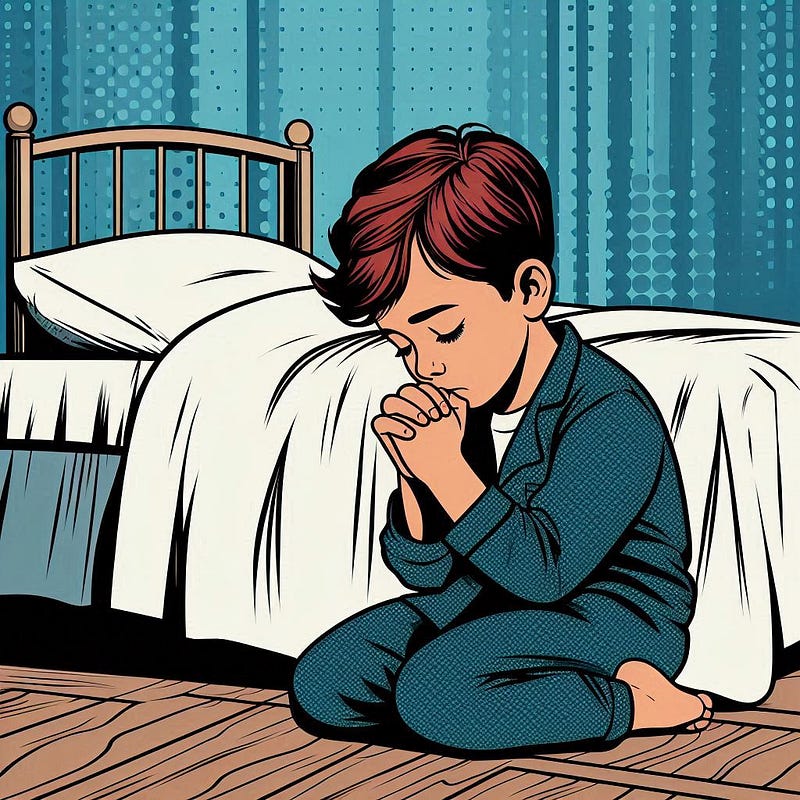
I’m not suggesting that will necessarily happen right away (although perhaps it does for some), but it will happen.
Through ups and downs, the general trajectory will be towards a life built on a confidence and assurance in Christ.
(2) Faith is Where We Place Our Hope
When we have a desire and expectation for something to happen, we have a “hope” in it.
We wait for a future fulfillment while living in the tension of not fully experiencing that which we hope for.
We might hope for a job promotion or for a promising relationship to one day turn into marriage.
- But we don’t yet have the promotion even though we’ve been told we’re the best fit.
- The relationship isn’t yet marriage even though all the signs are positive.
It’s a hope-filled belief in a reality we desire and expect to see but haven’t yet realized.
(3) Faith is About Something We Do Not See
Hebrews 11:1 tells us that Biblical faith is not something we can see.
We’ll never be able to construct an airtight argument for our faith that would convince everyone.
But God doesn’t ask us to have blind faith when we come to Him.

The Christian faith has a strong foundation of the Bible, historical accounts, archaeological evidence, the testimony of Christians through the ages, our own experiences, and more.
It’s a leap, but not a foolish leap.
There are plenty of intelligent people who first reasoned their way to faith because it seemed like the most plausible explanation for reality.¹
But despite the solid reasons, faith can be hard work. Faith actually takes faith.
Faith Takes Faith
God, it seems, has made faith possible but not always easy. Why?
He wants us to trust Him.
And without faith it is impossible to please God, because anyone who comes to him must believe that he exists and that he rewards those who earnestly seek him. [Hebrews 11:6]
If the story of the Bible is true, this makes sense.
Genesis 1:27 says humans are made in the image of God. The verses immediately before and after refer to God wanting us to have dominion here. To rule as His representatives.
We were made for relationship with God. He desires our trust, attention, and honor as relationally oriented bearers of His image.
It didn’t work out that way in the Garden for Adam and Eve. They fell away, unwilling to trust.

They listened to the serpent and their own desires and chose to disobey the one command God had given them. Sin entered the world, and humans were cut off from their relationship with a holy God.
But now — because of Jesus — we can get back to the Garden. We can do what Adam and Eve failed to do.
We can listen to Him instead of the serpent whispering doubts in our minds. And we can show our faith by following where He leads.
Hebrews 11 verses 4–38 show that faith is active. The people in relationship with God in the Hebrew Scriptures didn’t merely believe with their minds, they acted on their beliefs when called upon.
Faith and Works
The book of James has been much debated over the years.
In the preface to his 1522 translation of the New Testament, Martin Luther referred to James as the “epistle of straw.” Luther famously spent his adult life exposing abusive and manipulative practices in a Roman Catholic church that seemed to teach salvation could be earned through good works.
And it appears he was suspicious of a book that highlights how “works” are essential for the believer.
But James doesn’t say that good works help us to earn our salvation. Instead, good works are the absolutely inevitable result of a heart that has been changed by Jesus through faith.

According to James, works cannot be divorced from faith. One is shown by the other.
14 What good is it, my brothers and sisters, if someone claims to have faith but has no deeds? Can such faith save them? 15 Suppose a brother or a sister is without clothes and daily food. 16 If one of you says to them, “Go in peace; keep warm and well fed,” but does nothing about their physical needs, what good is it? 17 In the same way, faith by itself, if it is not accompanied by action, is dead.
18 But someone will say, “You have faith; I have deeds.”
Show me your faith without deeds, and I will show you my faith by my deeds. [James 2: 14–18]
James calls us to a living and active faith. Just like the heroes of the Old Testament in Hebrews 11: 4–38.
A Modern-Day Example of Active Faith
Let’s say a neighbor of mine stands accused of breaking and entering. We’ll call the alleged delinquent Del.
Del gets caught by the police trying to enter the garage of another neighbor’s house. Let’s call that alleged victim Vic.
No one was home at Vic’s when the police caught Del seeming to sneak in through the garage door.

There are now criminal charges, and Vic has filed a civil suit as well.
You’re perplexed because you’ve always known Del to be a kind, honest, and self-sacrificing neighbor.
And you’ve seen firsthand that Vic earned his reputation for being untrustworthy, manipulative, and litigious.
So you’re confident that Del is telling the truth when he assures you that there was a misunderstanding. You might say you have faith in his character.
And you believe Vic could be up to his old tricks of stirring up trouble in the neighborhood.
You get a chance to show your faith when you’re called as a character witness on Del’s behalf at the ensuing trial.
Will you honestly share your past experience with him and Vic?

It’s a potentially costly decision.
You know what you believe about Del. Testifying to what you know about his character could really help his cause.
You also know Vic has hinted he’ll file defamation suits against anyone who stands against him.
What are you going to do?
This, I propose, is your chance to decide if you have a living faith or a faith that is dead.
There’s a choice, and there’s a cost.
You must step out in faith if you vouch for Del. You’d be Peter walking out onto the water. Confident in your belief but unsure what will happen next.
You know you can’t simply offer Del your condolences and express your intellectual agreement that you believe he’s innocent.
Real faith means testifying to what you believe to be true at his trial. You will need to stand up and be counted.
Faith is a Paradox
Faith requires having confidence in a promise that we must believe to receive.
It is a hope in an expectation that we believe but can’t prove.
It is an intangible belief in the heart and mind that is expressed in tangible actions.
Faith is hard. It’s why my favorite verse about faith is a man struggling with another paradox of faith: believing while realizing how little he believes.
It comes from a father who is worried sick. A desperate man who reached out to Jesus for healing for his son who is afflicted by demons.
Mark 9 has the story:
21 Jesus asked the boy’s father, “How long has he been like this?”
“From childhood,” he answered. 22 “It has often thrown him into fire or water to kill him. But if you can do anything, take pity on us and help us.”
23 “‘If you can’?” said Jesus. “Everything is possible for one who believes.”
24 Immediately the boy’s father exclaimed, “I do believe; help me overcome my unbelief!” [Mark 9: 21–24]
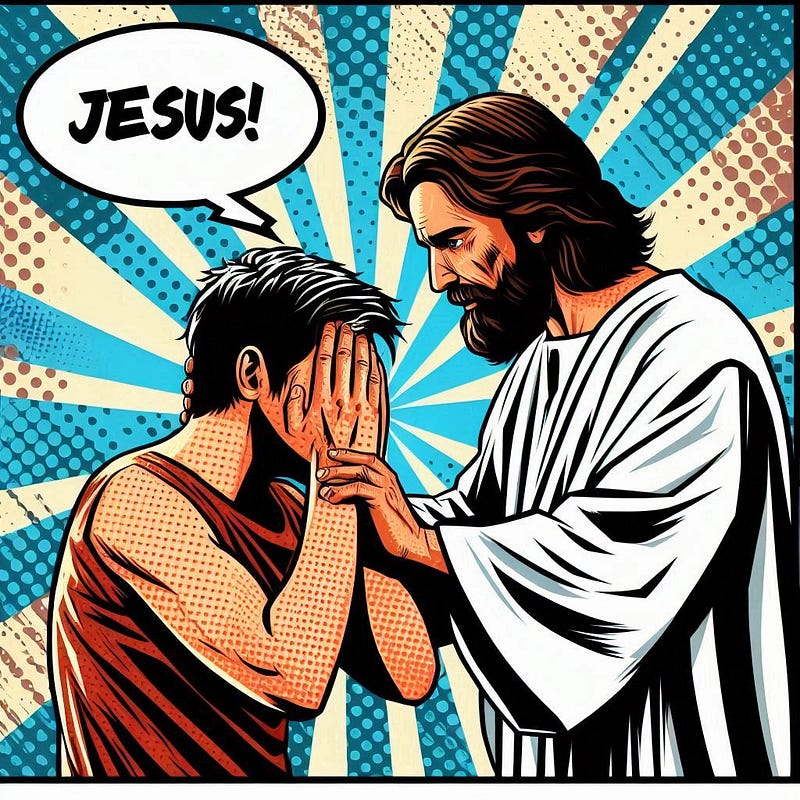
Isn’t that all of us to some degree or another? It is certainly me.
I have faith in you, Jesus. Help me believe more.
********************
1: List of converts to Christianity from nontheism: https://en.wikipedia.org/wiki/List_of_converts_to_Christianity_from_nontheism
Salvation – Eternal Life in Less Than 150 Words
Please Comment – here or on Medium