


With a Subtitle: Here we see what a sacrifice to Molech might have looked like, at least according to one 19th century artist.
A brief Excerpt: Here we see what a sacrifice to Molech might have looked like, at least according to one 19th century artist.
The god sits with “hands” outstretched, ready to receive from a people who desire to earn its favor by any means necessary.
Sometimes called “Molek” or “Moloch” or “Milcom,” the name is closely linked with child sacrifice in the Bible.
Beliefs about Molech
Until the early 20th century, most scholars believed that the name “Molech” referred to one of the Canaanite gods. A “god” who the Bible associated with child sacrifice.
But since that time, some have proposed that the name “Molech” actually refers to the act of the child sacrifice itself rather than a specific deity.
One reason for that is the Punic language.
The Hebrew word translated as Molech is “mlk.” Its vocalization is the same as Punic word “molk,” which means a child sacrifice.
What does Punic have to do with anything, you ask?
Punic was the language of the Carthaginians. And the Carthaginians were the ancestors of the Phoenicians who emigrated from Canaan.
They were the people who once lived in Byblos, Tyre, and Sidon. They worshipped / practiced Molech / molk. They became the Carthaginians after they eventually moved and resettled to one of their major trading outposts (Carthage).

There’s no consensus view on whether “mlk” in the Hebrew Scriptures refers to a particular god, or to a “molk” offering that could have been made to various gods.
But whether Molech is a proper noun or a specific type of sacrifice, it’s clear that it is supernatural evil. Because there are real demons hiding behind the false gods and the religious practices they demand.
And the God of the Bible makes it clear He detests anything related to Molech.
What God Thinks
The first commandment is that the Israelites shall have no other gods before the true God.
And He singles out the practice of “mlk” sacrifices as particularly detestable.
There are two specific prohibitions in Leviticus alone. First, in chapter 18.
Do not give any of your children to be sacrificed to Molek, for you must not profane the name of your God. I am the LORD. [Leviticus 18:21]
And again in chapter 21.
I myself will set my face against him and will cut him off from his people; for by sacrificing his children to Molek, he has defiled my sanctuary and profaned my holy name. [Leviticus 20:3]
There are many other references to Molech in the Bible. All with a direct message that God wants His people to have nothing to do with child sacrifice.
Child Sacrifice in Ancient Israel
Despite the pointed prohibitions, “mlk” worship seeped into the religious practices of the Israelites.
King Solomon, once renowned for his wisdom, turned aside from God in his old age and followed false gods.
He followed Ashtoreth the goddess of the Sidonians, and Molek the detestable god of the Ammonites. [1 Kings 11:5]
More than 200 years after Solomon, King Ahaz (reigned 735 — 720 BC) followed in his footsteps.
Not only did he ignore the counsel of the prophet Isaiah (who told Ahaz to maintain Judah’s independence from the Neo-Assyrian empire), but he practiced child sacrifice.
He followed the ways of the kings of Israel and even sacrificed his son in the fire, engaging in the detestable practices of the nations the LORD had driven out before the Israelites. [2 Kings 16:3]
Judah had a temporary return to faith in God under Hezekiah (reigned 715–686 BC) and Jerusalem was miraculously rescued from the invading Assyrians.
But things headed downhill under Manasseh (686–642 BC). Not only did Judah fall back under the sway of the Assyrians, but Manasseh practiced child sacrifice and angered the LORD.
He sacrificed his own son in the fire, practiced divination, sought omens, and consulted mediums and spiritists. He did much evil in the eyes of the LORD, arousing his anger. [2 Kings 21:6]
God is still indignant about these abominations during the time of the prophet Jeremiah (650–570 BC).
They built high places for Baal in the Valley of Ben Hinnom to sacrifice their sons and daughters to Molek, though I never commanded — nor did it enter my mind — that they should do such a detestable thing and so make Judah sin. [Jeremiah 32:35]
You can still see the tombs in the Valley of Hinnom today, just outside of Jerusalem. Such a place is called a tophet, a location used for the ritual sacrifice and burial of children.

The God of the Israelites is angry and offended by a people who would offer up their children.
When you offer your gifts — the sacrifice of your children in the fire — you continue to defile yourselves with all your idols to this day. Am I to let you inquire of me, you Israelites? As surely as I live, declares the Sovereign LORD, I will not let you inquire of me. [Ezekiel 20:31]
Is This For Real?
In a a 2014 article entitled “Ancient Carthaginians really did sacrifice their children” academics from around the world affirmed that these Canaanite ancestors really did do this.
Children — both male and female, and mostly a few weeks old — were sacrificed by the Carthaginians at locations known as tophets. The practice was also carried out by their neighbours at other Phoenician colonies in Sicily, Sardinia and Malta. Dedications from the children’s parents to the gods are inscribed on slabs of stone above their cremated remains, ending with the explanation that the god or gods concerned had ‘heard my voice and blessed me’. [Source, University of Oxford]

These former Phoenicians exported their religious practices throughout the Mediterranean as their empire grew.
The 1st century BC Greek historian Diodorus Siculus records one particular incident.
In battle against the Greeks in the late 4th century BC, the Carthaginians found their city surrounded and sought the favor of their god through “mlk.”
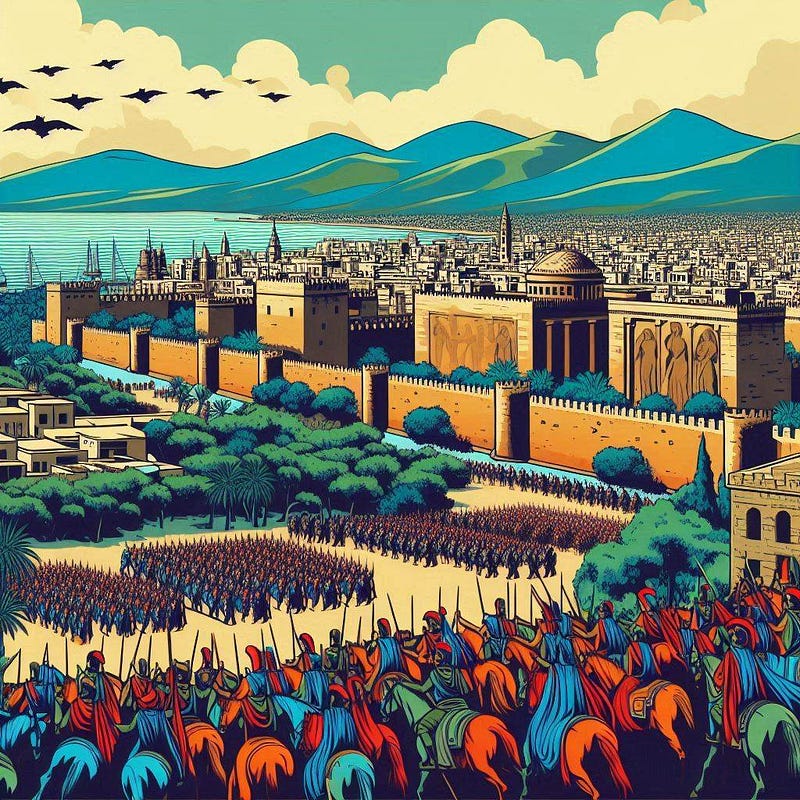
They [the Carthaginian people] also alleged that Cronus had turned against them inasmuch as in former times they had been accustomed to sacrifice to this god the noblest of their sons, but more recently, secretly buying and nurturing children, they had sent these to the sacrifice…When they had given thought to these things and saw their enemy encamped before their walls, they were filled with superstitious dread, for they believed that they had neglected the honours of the gods that had been established by their fathers. In their zeal to make amends for their omission, they selected two hundred of the noblest children and sacrificed them publicly; and others who were under suspicion sacrificed themselves voluntarily, in number not less than three hundred. There was in their city a bronze image of Cronus, extending its hands, palms up and sloping toward the ground, so that each of the children when placed thereon rolled down and fell into a sort of gaping pit filled with fire. [Source, Book XX — Library of History, Diodorus Siculus
This is worship of the false gods.
It leads only to destruction.
Rethinking Abraham and Isaac
The story of Abraham and Isaac used to fill me with a sense of dread.
But the more I’ve learned about Molech / mlk, the more I’ve come to see how God sets Himself in stark opposition to the dark supernatural forces in the world.
Demonic spirits demand a sacrifice from those who would seek their favor. It is based on fear. On panicked subjugation. The most vulnerable are offered up in order to make a request before “the gods.”
Absolute loyalty is required. And it leads only to death.
In the story of the Abraham and Isaac, the God of the Bible shows that he demands absolute loyalty as well. He has promised Abraham that he will make his offspring as numerous as the stars. And then he calls Abraham to offer up his son as a sacrifice.
The book of Hebrews tells us that Abraham trusted God so much that he reasoned that God must have been planning to resurrect Isaac. And God, seeing the faith of Abraham, intervened to show His true character.
He stayed Abraham’s hand and provided an alternate sacrifice. God made a way when it seemed impossible.
He’s the same God that later sent His own Son to live and die for the sake of humanity.
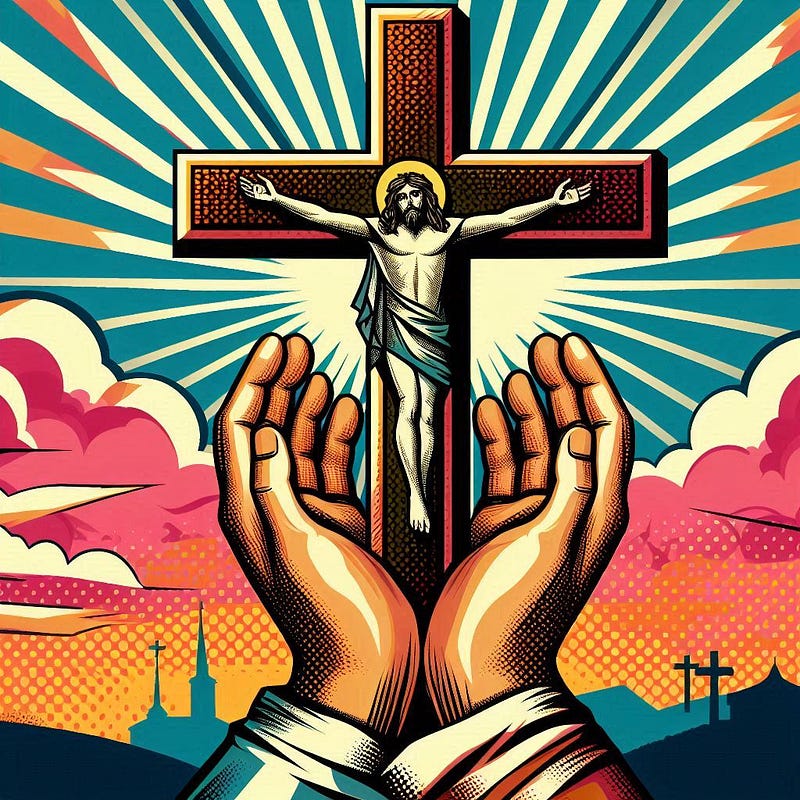
Jesus Christ is the complete opposite of the false gods.
Instead of demanding sacrifice to earn His favor, He is the sacrifice.
Instead of bringing bondage and fear, He brings freedom and hope.
And instead of having a limited power rooted in deception and evil, He has ultimate authority that will one day remove all forces of spiritual evil and set all things right.
Salvation – Eternal Life in Less Than 150 Words
Please Read/Respond to Comments – on Medium